
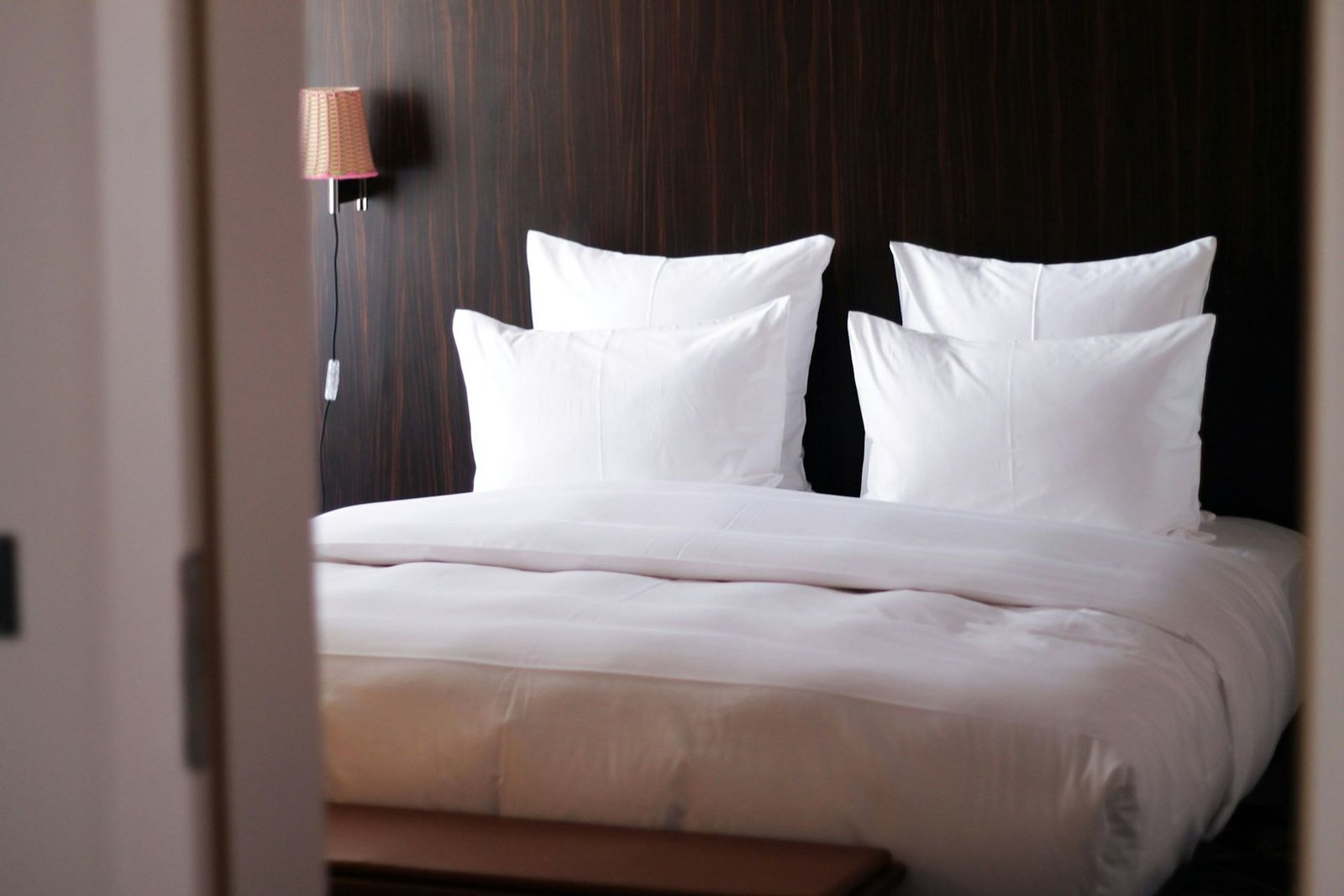
Thread count is the number of threads — warp plus weft — in one square inch of fabric. In the contract and hospitality trade it is usually written as a T-number, such as T130, T180, T200, T250 or T300.
What the T-numbers mean
| Quality | Weave | Typical use |
|---|---|---|
| T130–T144 | Percale | Budget, high-turnover, hospital and hostel |
| T180–T200 | Percale | Solid 3–4 star hotel standard |
| T250 | Percale or sateen | Premium 4-star |
| T300 | Sateen | 5-star and suites |
Higher is not always better
A higher thread count packs in finer threads, which feels smoother — but it also costs more, and in a commercial laundry it can dry more slowly and show wear sooner if the cotton quality is low. For most hotels, T200–T250 gives the best balance of feel, durability and cost.
Thread count vs fabric quality
Thread count only counts threads; it says nothing about the cotton or the finish. A well-made T200 in good combed cotton can feel better than a cheap T300. Always judge thread count alongside the fibre (cotton or polycotton), the weave (percale or sateen) and the finishing.
Polycotton T-counts
For durability and easy care, many hotels and hospitals use polycotton blends (such as 50/50 or 65/35) at T130–T200. These resist creasing and shrinkage and launder economically.
When you specify sheeting, give the T-count, the fibre and the weave together — that is what lets a supplier quote a firm, repeatable price.


